
The Board – Biographies
Patrick J. DeSouza, Executive Chairman

Dr. DeSouza has been Executive Chairman of Water Intelligence since 2010 when he led the Group’s initiation on AIM. He is responsible the strategy, capitalization and performance of the Group. Dr. DeSouza has over 25 years of operating and advisory leadership experience with both public and private companies in the infrastructure, technology and asset management industries. Over the course of his career, Patrick has significant experience in corporate finance and cross-border mergers and acquisitions. Dr. DeSouza has leadership experience in public policy having served at the White House as a Director on the National Security Council. He is a graduate of Columbia College, the Yale Law School and Stanford Graduate School. He is the author of Economic Strategy and National Security (2000) and has been a visiting lecturer at Yale Law School.
Laura Hills, Vice Chair

Ms. Hills has more than 30 years’ experience as a legal professional, having spent 10 years working for the Overseas Private Investment Corporation (OPIC), where she served as Associate General Counsel for the agency’s finance program, supervising a team of lawyers on all finance transactions ranging from micro-lending and small business to multi-creditor infrastructure project financing in emerging market countries. Laura brings considerable expertise in negotiating on infrastructure and renewables related transactions globally. Ms. Hills is the founder of Hills, Stern & Morley LLP, an emerging markets legal boutique based in Washington D.C. Laura holds undergraduate, graduate and law degrees from Stanford University.
Dan Ewell, Independent Non-Executive Director
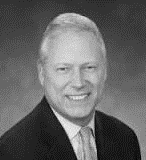
Dan Ewell is currently a Senior Advisor at Morgan Stanley, where he has worked as an investment banker for over 33 years. Prior to assuming his current role, Mr. Ewell served as Vice Chairman and Head of Western Region Investment Banking for Morgan Stanley. Dan has extensive experience in advising companies and helping them grow through capital raising and strategic transactions. His experience spans a range of sectors including consumer/retail, industrial, healthcare and media/technology, and included companies with franchised business models. Mr. Ewell brings the Group significant capital markets expertise as it scales operations internationally. Dan heads the audit committee. He is a graduate of University of California, Berkeley, Yale Law School and Yale School of Management.
Philip Meckley, Independent Non-Executive Director
Philip Meckley currently owns fast-growing franchises in California and Texas. He brings over twenty years of operating experience in growing ALD locations and has provided significant leadership to the entire franchise system. In addition, Phil and his wife Robin have provided leadership with respect to ALD’s charitable efforts to help disadvantaged communities in various parts of the world solve water infrastructure issues, most recently in rural India.
Bobby Knell, Independent Non-Executive Director

Mr. Knell retired as the founder/owner of the American Leak Detection franchise of Dallas, Texas – a multimillion dollar franchise now run by his son. Bobby is recognized as a leader within the American Leak Detection franchise System. As such, he provides an important stakeholder voice on the board. Moreover, Bobby provides the board guidance on the operations and growth of the Group’s core franchise business.
Pat Lamarco, Chief Financial Officer; Board Observer
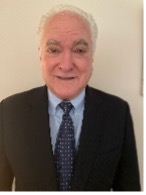
Pat Lamarco is CFO of Water Intelligence plc. Since 2014 Pat has been responsible for all financial reporting and audit processes. As Board Observer, Pat regularly briefs the Board on all aspects of the Group’s financial performance. He brings more than 40 years of experience in the accounting profession with both public and private companies. Pat spent most of the career as a partner at RSM, one of the major global accounting firms. Pat has the following professional accreditations: CPA – Certified Public Accountant, CMA – Certified Management Accountant and CGMA – Charted Global Management Accountant. He has also attained the following designations: AICPA/BV – American Institute of Public Accountants/Accredited in Business Valuations and the CVA – Certified Analyst.
Board Committees
In addition, the Company has an Audit Committee and a Remuneration Committee in place. The chairman of the committees reports to the board on the activities of that committee.
The Audit Committee is chaired by Dan Ewell, a non-Executive Director. The other member of the Committee is Laura Hills. The Audit Committee is responsible for ensuring that the financial performance, position, and prospects for the Company are properly monitored, controlled and reported on and for meeting the auditors and reviewing their reports relating to accounts and internal controls.
The Remuneration Committee is chaired by Bobby Knell, a Non-Executive Director. The other member of the Committee is Dan Ewell. The Remuneration Committee is responsible for reviewing the performance of Executive Directors and determining remuneration and service agreements. The Remuneration Committee also determines the payment of any bonuses to Executive Directors and the grant of options.
Chairman’s Corporate Governance Report
As Chairman of the Board of Directors of Water Intelligence plc (“Water Intelligence”, “We”, or the “Company/Group” as the context requires), it is the responsibility of the Chairman to ensure that Water Intelligence has both sound corporate governance and an effective Board. Responsibilities also include leading the Board effectively, overseeing the Company’s corporate governance model, and ensuring that good high quality information flows freely between Executives and Non-Executives in a timely manner.
Water Intelligence has decided to adopt the Quoted Companies Alliance Corporate Governance (QCA Code) in line with the London Stock Exchange’s AIM Rules, requiring all AIM-listed companies to adopt and comply or explain non-compliance with a recognised corporate governance code. This report follows the structure of these guidelines and explains how we have applied the guidance. We will provide annual updates on our compliance with the QCA Code. The Board considers that the Group complies with the QCA Code so far as it is practicable having regard to the size, nature and current stage of development of the Company, and will disclose any areas of non-compliance in the text below.
Water Intelligence understands that application of the QCA Code supports the Company’s medium to long-term success whilst simultaneously managing risks and providing an underlying framework of commitment and transparent communications with stakeholders. We are committed to monitoring and promoting a socially responsible corporate culture, illustrated through internal policies and external stakeholder engagement.
Principle 1
Establish a strategy and business model which promotes long-term value.
Our corporate strategy has been to differentiate ourselves through the use of proprietary and third party technologies to provide minimally-invasive leak detection and repair. Given our matrix of solutions for clean water and waste water problems, the Group also seeks to establish a scalable operating platform that provides across business units a “One-Stop Shop” for customers wanting a range of solutions to faulty water infrastructure whether residential, commercial, or municipal.
Our two operating subsidiaries – American Leak Detection (ALD) and Water Intelligence International (WII) – provide complementary approaches for attacking the market. ALD focuses on residential and business-to-business customers through its franchise-operated and corporate-operated locations. ALD’s installed base of customers and service locations across the US enable opportunities for follow-through product sales. UK-based WII, meanwhile, focuses on international corporate expansion through an offering of municipal solutions that also can be sold by existing ALD locations in US geographies.
The Group is well on the way to creating a robust platform that can upsell and cross-sell solutions to our growing base of customers, whilst delivering sustainable increases in shareholder value. With our platform, we are also able to help make markets for exciting technology products that are emerging.
We aim to put capital to work to scale our platform faster both organically and through acquisition. We are deploying resources based on four operating priorities derived from what we already know has worked well. Each of these four operating priorities is risk-adjusted because we are mindful, as always, of the importance of calibrating both revenue growth and profitability.
| Operating Priority | Key Challenges | Mitigation | Primary Benefit |
| Scale and integrate operations across existing sales footprint – U.S., UK, Australia, Canada – and new geographies, especially through business-to-business partnerships | Meeting robust market demand for solutions across geographies; hiring and training sufficient skilled staff | Focused corporate development team has proven ability to manage demand created by new business; “People Plan” put in place to hire and train staff nationally and internationally | Efficient use of existing sales platform, creating opportunities to cross-sell and up-sell solutions and, in so doing, lower customer acquisition costs for higher profitability over time |
| Enhance the Company’s technology profile through own technology and partnerships | Selecting technologies and ensuring product commercialization while meeting demand for more solutions from customers, especially given the trend towards “smart homes” and “smart infrastructure | The Company has a history of technology development and commercialization of technology-based solutions; the Company’s market presence across the US attracts third party technology companies seeking the Company to help make a market through resale of cutting edge products to its customers; the Company has significant technology R&D relationships at Columbia University, Yale University, Stanford University and University of Chicago through which to develop proprietary products | Market trends are focused on the increasing adoptions of technology solutions; Increased availability of technology will enable the Company to create more sales opportunities |
| Strategic development of new geographies through corporate operations or franchise operations | Deployment of capital and continued reinforcement of the Company’s core franchise system | Company will assess appropriate entry strategy for markets | Addressable market is global and there is an opportunity to meet significant demand for the Company’s solutions with the right mix of corporate and franchise operated locations |
| Continued select reacquisition of franchise operated locations | Picking the right balance of franchise and corporate operations and deploying capital efficiently | The Company has strong experience in managing corporate and franchise transitions | Win – Win opportunities for the Company: franchisees have exit opportunities to realize liquidity after developing their respective territories and the Company can set up strategic corporate locations to grow sales presence faster for both corporate and franchise operated locations |
Principle 2
Seek to understand and meet shareholder needs and expectations
The Executive Chairman Patrick DeSouza and Laura Bass, Director of Strategic Finance, are the key shareholder liaison contacts alongside the Company’s brokers, RBC Europe and Dowgate.
The Group seeks to maintain and enhance good relations with its shareholders. The Company’s interim and annual reports are supplemented by capital market presentations and through public announcements to the market on operating, technological and financial progress.
The Board actively engages with shareholders at least three times a year. Two sets of meetings are held following results announcements and are either one-to-one or group meetings with institutional and high net worth investors. Another forum for meeting shareholders is the AGM, to which all shareholders are invited to attend and spend time with management.
The Company’s broker provides written investor feedback after all investor presentations and meetings, as well as, calls with shareholders following key items of news flow. Feedback is shared with the Board. Via communication with the Company’s broker and its analyst, together with Regulatory News Service announcements and the Company’s Annual Report, the Board gauges investor sentiment, sets expectations and communicates the Company’s intentions.
Where feedback is received directly from shareholders or shareholder advisory groups, for example relating to voting intentions on general meeting motions, this is brought to the attention of and discussed by the Board and the key Company investor liaisons will discuss with investors their reasons for voting and if necessary work with these and other investors to determine an appropriate course of action for the benefit of all shareholders.
Principle 3
Take into account wider stakeholder and social responsibilities and their implications for long-term success
The Board recognises that the long-term success of the Company is reliant upon the efforts of staff, franchisees, partners, customers and other stakeholders. The Board has put in place a range of processes and systems to ensure that there is close oversight and contact with its key resources and relationships, and methods of engagement are outlined below. The Company also prepares an annual strategic plan and detailed budget which takes into account a wide range of key resources.
| Stakeholder | Reason for engagement | How we engage |
| Staff | Good two-way communication with staff is a key requirement for high levels of engagement, fostering a culture of productivity, innovation and accountability. | Regular communication with staff, both in person and by electronic communication to encourage an understanding of culture of the business and to develop personal capabilities. The Company also has training programs to further develop technical skills. It also has health and safety protocols. The Company has an employee option plan that enables incentives to be aligned among internal stakeholders |
| Franchisees | Franchisees are key to the growth of the overall Group and maintaining a network of empowered and ambitious franchisees aids overall service delivery and group profitability | Regular communication between franchisees and the executive Board of the Company. Franchisees also have their own sub-committee, ALDAC which regularly liaises with the Board in relation to direction of the wider group; the Company has an Annual Convention for the franchisees. The Convention has training workshops, business development opportunities and a trade fair for new technologies |
| Business to business partners | Increasingly important with national agreements that continue to drive additional work through the corporate and franchise system | Consistent communication regarding levels of service provision and certain standards of service required to be met; common programs such as data security audits enhance cooperation. Key partners are invited to the Annual Franchise Convention. |
| Customers | Understanding customer requirements enables us to determine our resource commitment to client types and also where to focus development of new and enhanced services. | Quality of work is always important and is evidenced by repeat business from both commercial and residential customers; Company has a code of conduct for its service technicians to ensure quality and professionalism |
| Suppliers | Whilst there are limited suppliers to the business, as third party technologies are increasingly sold, this becomes more relevant | Good understanding of suppliers ability to deliver an appropriate product and also gaining an understanding of how to implement and use goods supplied to the group; Suppliers are invited to the Company’s Annual Franchise Convention |
| Shareholders | Meeting regulatory requirements and understanding shareholder sentiments on the business, its prospects and performance of management | See Principle 2 above |
| Environment | The Company’s business focuses on water saving solutions and hence communicates an environmental value proposition and mission statement to the world. Water and poor infrastructure is a major problem in lots of communities and our solutions connect us to the broader world | Consistent awareness raised with staff and franchisees of the importance of water and ensuring that our work causes the least environmental damage possible. The Annual Convention reinforces our environmental messaging and strategy |
Principle 4
Embed effective risk management, considering both opportunities and threats, throughout the organisation
The Directors recognise their responsibility for the Group’s system of internal control and have established systems to ensure that an appropriate and reasonable level of oversight and control is provided. The Group’s systems of internal control are designed to help the Group meet its business objectives by appropriately managing, rather than eliminating, the risks to those objectives. The controls can only provide reasonable, not absolute, assurance against material misstatement or loss.
The core business of the Group – American Leak Detection – undergoes an annual audit of Systems Operations & Controls (SOC) by a third party auditor. The SOC Audit, among other items, focuses on data security.
The Executive Chairman with the assistance of the Company Secretary and the Chief Financial Officer manages a risk register for the group that identifies key risks in the areas of corporate strategy, financial, clients, staff, environmental and the investment community. The Governance Committee of the board are provided with a copy of the register. The register is reviewed periodically and is updated as and when necessary.
Within the scope of the annual audit, specific financial risks are also evaluated in detail, including in relation to foreign currency, interest rates, debt covenants, taxation and liquidity.
The annual budget is reviewed and approved by the Board. Financial results, with comparisons to budget and latest forecasts are reported on a monthly basis to the Board together with a report on operational achievements, objectives and issues encountered. Significant variances from plan are discussed at Board meetings and actions set in place to address them.
Approval levels for authorisation of expenditure are at set levels throughout the management structure with any expenditure in excess of pre-defined levels requiring approval from the Executive Chairman and the Chief Financial Officer.
Measures continue to be taken to review and embed internal controls and risk management procedures into the business processes of the organisation and to deal with areas of improvement which come to the management’s and the Board’s attention. We expect the internal controls for the business to change as the business expands both geographically and in terms of product development.
The Company’s auditors are encouraged to raise comments on internal control in their management letter following their audit, and the points raised and actions arising are monitored through to completion by the Audit Committee.
Principle 5
Maintain the board as a well-functioning, balanced team led by the chair.
The Board, chaired by Patrick DeSouza, comprises two executive and three non-executive directors and it oversees and implements the Company’s corporate governance programme. As chairman, Dr. DeSouza is responsible for the Company’s approach to corporate governance and the application of the principles of the QCA Code. Dan Ewell, Bobby Knell and Philip Meckley are the Company’s independent directors. The board is supported by two committees: audit and remuneration. The board does not consider that it is of a size at present to require a separate nominations committee, and all members of the board are involved in the appointment of new directors.
Each Board member commits sufficient time to fulfill their duties and obligations to the Board and the Company. They are required to attend at least 4 Board meetings annually and join Board calls that take place between formal meetings and offer availability for consultation when needed.
Executive directors are expected to commit effectively 100% of their time to the Company and non-executive directors are expected to commit a minimum of 1 day per month to the Company.
Board papers are sent out to all directors in advance of each Board meeting including management accounts and accompanying reports from those responsible.
Meetings held during the period between 1 January 2023 and 31 December 2023 and the attendance of directors is summarised below:
| Board meetings | Audit committee | Remuneration committee | |
| Possible (attended) | Possible (attended) | Possible (attended) | |
| Patrick DeSouza | 6/6 | ||
| Bobby Knell | 5/6 | 2/2 | |
| Michael Reisman | 3/4 | 2/2 | 2/2 |
| Phil Meckley | 2/2 | ||
| Laura Hills | 6/6 | ||
| Dan Ewell | 6/6 | 2/2 | |
Principle 6
Ensure that between them the directors have the necessary up-to-date experience, skills and capabilities.
All five members of the Board bring complementary skill sets to the Board. One director is female and four are male. The Board believes that its blend of relevant experience, skills and personal qualities and capabilities is sufficient to enable it to successfully execute its strategy. In addition, the Board receives regular updates from, amongst others, its nominated adviser, legal counsel and company secretary in relation to key rule changes and corporate governance requirements, as well as regular liaison with audit firms both in the UK and the US in respect of key disclosure and accounting requirements for the group, especially as accounting standards evolve. In addition, each new director appointment is required to receive AIM rule training from the Company’s nominated adviser at the time of their appointment.
Patrick J. DeSouza, Executive Chairman
Term of office: Appointed as Executive Chairman in July 2010.
Background and suitability for the role: Dr. DeSouza has been Executive Chairman of Water Intelligence since 2010 when he led the Group’s initiation on AIM. Prior to the Group’s listing on AIM, Dr. DeSouza was the CEO of American Leak Detection, the Group’s core business since 2006. Dr. DeSouza is responsible the strategy, capitalization and performance of the Group. Dr. DeSouza has over 25 years of operating and advisory leadership experience with both public and private companies in the infrastructure, technology and asset management industries. Over the course of his career, Patrick has significant experience in corporate finance and cross-border mergers and acquisitions. Dr. DeSouza has leadership experience in public policy having served at the White House as a Director on the National Security Council. He is a graduate of Columbia College, the Yale Law School and Stanford Graduate School. He is the author of Economic Strategy and National Security (2000) and has been a visiting lecturer at Yale Law School.
Laura Hills, Vice Chair
Term of office: Appointed as a non-executive director on 6 February 2018.
Background and suitability for the role: Ms. Hills has more than 30 years’ experience as a legal professional, having spent 10 years working for the Overseas Private Investment Corporation (OPIC), where she served as Associate General for the agency’s finance program, supervising a team of lawyers on all finance transactions ranging from micro-lending and small business to multi-creditor infrastructure project financing in emerging market countries. Laura brings considerable expertise in negotiating on infrastructure and renewables related transactions globally. Ms. Hills is the founder of Hills, Stern & Morley LLP, an emerging markets legal boutique based in Washington D.C. Laura holds undergraduate, graduate and law degrees from Stanford University.
Philip Meckley, Independent Non-executive Director
Term of office: Appointed as a non-executive director on 7 November 2023.
Background and suitability for the role: Philip Meckley currently owns fast-growing franchises in California and Texas. He brings over twenty years of operating experience in growing ALD locations and has provided significant leadership to the entire franchise system. In addition, Phil and his wife Robin have provided leadership with respect to ALD’s charitable efforts to help disadvantaged communities in various parts of the world solve water infrastructure issues, most recently in rural India.
Dan Ewell, Independent Non-Executive Director
Term of office: Appointed as a non-executive director on 6 February 2018.
Background and suitability for the role: Dan Ewell is currently a Senior Advisor at Morgan Stanley, where he has worked as an investment banker for over 33 years. Prior to assuming his current role, Mr. Ewell served as Vice Chairman and Head of Western Region Investment Banking for Morgan Stanley. Dan has extensive experience in advising companies and helping them grow through capital raising and strategic transactions. His experience spans a range of sectors including consumer/retails, industrial, healthcare and media/technology, and included companies with franchised business models. Mr. Ewell brings the Group significant capital markets expertise as it scales operations internationally. He is a graduate of University of California, Berkeley, Yale Law School and Yale School of Management.
Bobby Knell, Independent Non-Executive Director
Term of office: Appointed as a non-executive director in January 2019.
Background and suitability for the role: Mr. Knell retired as the founder/owner of the American Leak Detection franchise of Dallas, Texas – a multimillion dollar franchise now run by his son. Bobby is recognized as a leader within the American Leak Detection franchise System. As such, he provides an important stakeholder voice on the board. Moreover, Bobby provides the board guidance on the operations and growth of the Group’s core franchise business.
The company secretary is responsible for ensuring that Board procedures are followed and that all applicable rules and regulations are complied with. The company secretary is supported and guided in this role by the Company’s legal advisors.
The Directors have access to the Company’s NOMAD, Company Secretary, lawyers and auditors as and when required and are able to obtain advice from other external bodies when necessary.
Principle 7
Evaluate board performance based on clear and relevant objectives, seeking continuous improvement.
Board performance effectiveness process
The performance and effectiveness of the Board, its committees and individual Directors is reviewed by the Chairman and the Board an ongoing basis. Training is available should a Director request it, or if the Chairman feels it is necessary. The performance of the Board is measured by the Chairman and Dan Ewell, one of the non-executive directors, with reference to the Company’s achievement of its strategic goals.
Succession planning and Board appointments
The Board meets as and when necessary to consider the appointment of new executive and non-executive directors and the Board as a whole takes responsibility for succession planning. Board members all have appropriate notice periods so that if a Board member indicates his/her intention to step down, there is sufficient time to appoint a replacement, whether internal or external. The Board continually reviews the needs of the Company, in terms of skills and has developed a list of potential candidates to fill senior roles should the need arise.
Each director is required to offer themselves for re-election at least once every three years as per the Company’s articles of association. Board appointments are made after consultation with advisers including the Nomad who undertakes due diligence on all new potential Board candidates.
Principle 8
Promote a corporate culture that is based on ethical values and behaviours
Corporate Responsibility
The Board recognises its employment, environmental and health and safety responsibilities. It devotes appropriate resources towards monitoring and improving compliance with existing standards. All members of the Board have significant experience in matters of public policy.
Employees
The Board recognises that the Group’s employees are its most important asset.
The Group is committed to achieving equal opportunities and to complying with relevant anti-discrimination legislation. It is established Group policy to offer employees and job applicants the opportunity to benefit from fair employment, without regard to their sex, sexual orientation, marital status, race, religion or belief, age or disability. Employees are encouraged to train and develop their careers. The Group has an employee handbook that is provided to all employees upon starting their employment within the Group.
The Group has continued its policy of informing all employees of matters of concern to them as employees, both in their immediate work situation and in the wider context of the Group’s well-being.
In addition, all directors and senior employees are required to abide by the Group’s share dealing code, which was updated in 2016 to reflect changes made to legislation following the introduction of the Market Abuse Regulation.
Principle 9
Maintain governance structures and processes that are fit for purpose and support good decision-making by the board
The Board is responsible to shareholders for the proper management of the Company and meets formally and through calls between formal meetings at least six times a year to set the overall direction and strategy of the Company, to review operating and financial performance and to consider and advise on senior management appointments. The Board also monitors and approves financial policy and budgets, including capital expenditure. All key operational decisions are subject to Board approval. The Board’s members are well informed, have access to all parts of the business, and are appropriately equipped through their own skills, experience and personality to make good business decisions.
Specific items that are reserved for the Board are:
- Budget
- Transactions
- Equity Compensation
In addition, the Company has an Audit Committee and a Remuneration Committee in place. These chairman of the committees reports to the board on the activities of that committee.
The Audit Committee is chaired by Dan Ewell, a non-Executive Director. The other member of the Committee is Laura Hills. The Audit Committee is responsible for ensuring that the financial performance, position, and prospects for the Company are properly monitored, controlled and reported on and for meeting the auditors and reviewing their reports relating to accounts and internal controls.
The Remuneration Committee is chaired by Bobby Knell, a Non-Executive Director. The other member of the Committee is Dan Ewell. The Remuneration Committee is responsible for reviewing the performance of Executive Directors and determining the remuneration and basis of service agreement. The Remuneration Committee also determines the payment of any bonuses to Executive Directors and the grant of options.
The board has approved the adoption of the QCA Code as its governance framework against which this statement has been prepared and will monitor the suitability of this code on an annual basis and revise its governance framework as appropriate as the group evolves.
Principle 10
Communicate how the company is governed and is performing by maintaining a dialogue with shareholders and other relevant stakeholders
This Corporate Governance Report is included within the Corporate Governance section of the Water Intelligence website and is reviewed and updated annually.
The Company maintains a regular dialogue with stakeholders including shareholders to enable interested parties to make informed decisions about the Company and its performance. The Board believes that transparency in its dealings offers a level of comfort to stakeholders and an understanding that their views will be listened to.
The Board already discloses the result of general meetings by way of announcement and discloses the proxy voting numbers to those attending the meetings. In order to improve transparency, the Board has committed to publishing proxy voting results on its website in future. In the event that a significant portion of voters have voted against a resolution, an explanation of what actions the Company intends to take to understand the reasons behind the vote will be included.
The link to the Company’s historical annual reports, which includes all notices of AGMs and corporate governance reports and statements for the relevant periods, is: https://waterintelligence.co.uk//rule-26-investor-relations/documentation/annual-reports-and-accounts/